




Introduction

Fiber laser cutting machines are increasingly used in metal fabrication and manufacturing as businesses seek faster, more precise, and more automated cutting processes. As demand for these machines grows, buyers also face more choices among equipment suppliers with different manufacturing and service capabilities. Choosing a reliable fiber laser cutting machine manufacturer is therefore essential for finding equipment that matches production requirements and supports stable long-term operation.
What Is a Fiber Laser Cutting Machine Manufacturer?
A fiber laser cutting machine manufacturer is a company that designs, develops, produces, assembles, tests, and supplies fiber laser cutting equipment for different metal processing applications. Its responsibilities can cover machine structure, laser and cutting systems, motion control, electrical systems, auxiliary equipment, and equipment commissioning, as well as technical support for installation and operation. Unlike a company that only resells standard equipment, a manufacturer with integrated production and engineering capabilities can have greater control over machine configuration, manufacturing processes, testing, and customization according to specific cutting requirements.
What Should You Look for in a Reliable Fiber Laser Cutting Machine Manufacturer?
When evaluating a manufacturer, buyers should look beyond the machine's price and laser power and examine the manufacturer's overall production and technical capabilities.
- Manufacturing Capability
- Equipment Configuration
- Quality Control
- Application Experience
- Technical and Service Capability
-
 Manufacturing Capability
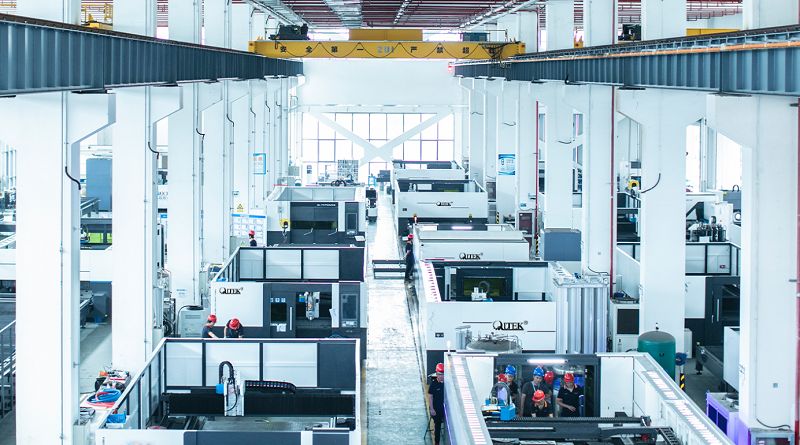
A reliable manufacturer should have sufficient in-house manufacturing and assembly capabilities to control important stages of equipment production. Buyers can examine whether the company operates its own production facilities, carries out machine-bed fabrication and equipment assembly internally, and has dedicated processes for machine testing before shipment. These capabilities can provide greater control over manufacturing consistency and equipment quality.
-
 Equipment Configuration
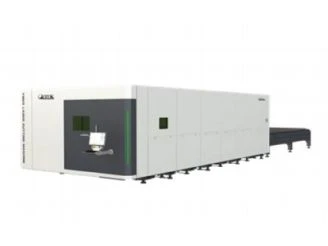
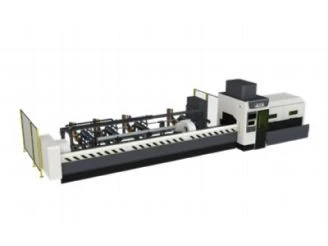
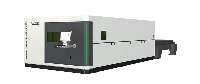
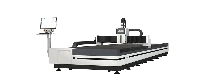
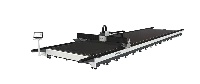
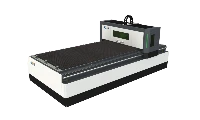
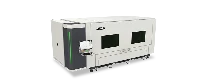
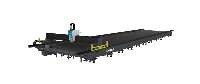
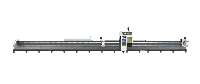
The manufacturer should offer equipment configurations that correspond to different materials, sheet thicknesses, workpiece sizes, and production requirements. This may include different laser power levels, working areas, cutting heads, drive systems, machine structures, and auxiliary systems. A broader configuration range gives buyers more flexibility to select equipment based on actual application requirements instead of choosing a machine that is oversized or under-equipped.
-
 Quality Control
Quality control should cover the complete manufacturing process rather than only the final appearance of the machine. Buyers can ask about component inspection, machine assembly, system testing, cutting tests, and final equipment inspection. Certifications such as ISO and CE can also provide additional information about the manufacturer's quality-management and equipment-compliance practices.
-
 Application Experience
Experience with different metal-cutting applications allows a manufacturer to better understand how material type, thickness, cutting speed, and product requirements affect machine configuration. A manufacturer that has worked with industries such as metal fabrication, automotive components, construction, furniture, and machinery manufacturing may be better positioned to recommend equipment according to specific production conditions.
-
 Technical and Service Capability
Technical capability should extend beyond machine manufacturing to installation, commissioning, operator training, troubleshooting, and spare-parts support. For overseas buyers in particular, the manufacturer's ability to provide remote technical assistance and application support can affect how efficiently the equipment is installed and put into production.
What Should You Consider When Choosing a Fiber Laser Cutting Machine Manufacturer?
After evaluating the manufacturer's capabilities, buyers should compare those capabilities with their own production requirements.
The main materials and thickness ranges should be identified before selecting equipment. Carbon steel, stainless steel, aluminum, copper, brass, and other metals have different cutting characteristics, while thicker materials may require higher laser power and different cutting parameters. Providing the manufacturer with actual material and thickness requirements can help determine a more appropriate machine configuration.
Production volume determines the required balance between cutting speed, machine capacity, and operating efficiency. Buyers should consider expected output, cutting speed, acceleration, working area, and the number of parts that need to be processed within a given period rather than selecting a machine based only on its maximum advertised speed.
The working area should correspond to the sheet sizes and workpieces most commonly processed. Standard cutting areas may be sufficient for common sheet formats, while large-format production may require a larger working area and machine structure capable of supporting longer travel distances. Machine dimensions should also fit the available factory space and allow sufficient room for operation and maintenance.
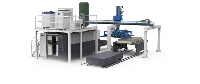
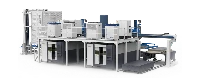
For higher-volume production, buyers should consider whether the laser cutting machine can be integrated with automatic loading, unloading, material storage, sorting, or other material-handling systems. A manufacturer with automation capabilities can provide a more complete production solution and reduce the amount of manual material handling required around the cutting process.
Some production applications require configurations that differ from standard machine specifications. Buyers may need a specific working area, machine structure, cutting head, control system, automation arrangement, or connection with existing production equipment. The manufacturer's ability to customize these elements can be important when standard equipment does not fully match the production process.
What Are the Benefits of Choosing a Reliable Fiber Laser Cutting Machine Manufacturer?
Selecting a reliable manufacturer can provide practical advantages throughout equipment selection, installation, and ongoing production.
• More Consistent Equipment Quality - Controlled manufacturing, assembly, and testing processes can help maintain more consistent machine performance.
• Better-Matched Machine Configuration - Engineering and application experience can help buyers select laser power, working area, cutting systems, and auxiliary equipment according to actual production requirements.
• More Stable Production Performance - Properly matched machine structures, motion systems, laser components, and control systems can support consistent cutting during continuous operation.
• Easier Production Expansion - A manufacturer with multiple machine configurations and automation capabilities can provide additional equipment or integrated systems as production requirements increase.
• Better Technical and After-Sales Support - Installation guidance, operator training, remote technical assistance, and spare-parts support can help reduce difficulties during commissioning and long-term operation.
Conclusion
Choosing a reliable fiber laser cutting machine manufacturer means evaluating more than the specifications of a single machine. Manufacturing capability, equipment configuration, quality control, application experience, and technical support should all be considered together with the buyer's material, cutting thickness, production volume, working area, and automation requirements. QLTEK provides fiber laser cutting machine solutions with different power levels, working areas, equipment configurations, and automation options, supported by in-house manufacturing, engineering, testing, and technical services. Contact us to discuss your metal cutting requirements and find a suitable fiber laser cutting machine solution for your production needs.