








Introduction
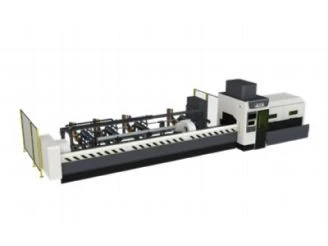
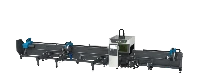
A tube laser cutting machine uses a chuck system to hold, position, and rotate tubes and profiles during laser cutting. Different chuck configurations can influence how a machine handles workpieces, controls tube movement, and performs cutting operations. For manufacturers comparing 2-chuck and 3-chuck tube laser cutting machines, the right choice should be based on the characteristics of the materials being processed and the requirements of the production process rather than simply assuming that one configuration is universally better.

What Is the Difference Between a 2-Chuck and 3-Chuck Tube Laser Cutting Machine?
The basic difference between the two configurations is the number and arrangement of chucks used to control the tube during processing. However, the actual capabilities of a machine depend on its mechanical design, chuck structure, processing range, and other equipment configurations.
|
Aspect |
2-Chuck Tube Laser Cutting Machine |
3-Chuck Tube Laser Cutting Machine |
|
Chuck Configuration |
Uses two chucks to clamp, position, and rotate the tube during cutting. |
Uses three chucks to provide an additional clamping and positioning point. |
|
Workpiece Control |
Provides two-point control and is commonly used for standard tube-cutting applications. |
Provides additional control of the workpiece, which can be useful for more demanding tube-processing conditions. |
|
Workpiece Requirements |
Can be suitable for lighter and standard-size tubes when the machine's rated capacity is sufficient. |
Can be suitable for heavier, longer, or more demanding workpieces when supported by the machine's design. |
|
Tube End Processing |
Chuck-avoidance designs can help reduce the amount of unusable material at the tube end. |
The additional chuck can allow the machine to maintain control of the tube closer to the end during applicable cutting operations. |
|
Processing Flexibility |
Well suited to common tube and profile cutting requirements. |
Can provide additional flexibility for demanding or more complex tube-processing applications, depending on configuration. |
|
Cutting Options |
Standard tube cutting capabilities depend on the machine's cutting head, chuck system, and other configurations. |
Some machines can be configured for additional operations, such as bevel cutting, depending on the equipment design. |
What Factors Should You Consider When Choosing Between 2-Chuck and 3-Chuck?
After understanding the basic configuration difference, buyers should evaluate how the machine will handle their actual workpieces and production requirements.
Tube Size and Weight
Tube diameter, cross-sectional dimensions, wall thickness, and weight should all be considered when evaluating chuck configurations. The important point is not simply whether a machine has two or three chucks, but whether its chuck system and overall machine structure can safely and consistently handle the required workpiece range. Buyers should therefore compare the manufacturer's rated tube dimensions and loading capacity with the materials used in regular production.
Processing Length
The length of the tubes being processed can affect workpiece stability and positioning during cutting. Longer tubes may require additional support and more controlled movement to maintain stable processing. Buyers should compare the required tube lengths with the machine's effective processing range and examine how the chuck system works together with supporting mechanisms throughout the cutting process.
Cutting Complexity
The required cutting operations should also be considered before selecting a machine configuration. Basic holes, slots, contours, and end cuts may have different equipment requirements from applications involving angled cuts, complex profiles, or multiple cutting directions. Buyers should identify the actual shapes and operations required and confirm that the selected machine supports them.
Material Utilization
Material utilization is particularly important when tube materials have a high purchase cost or when production generates significant residual material. Chuck movement, chuck avoidance, and tube-end processing methods can affect how much material remains unusable after cutting. Buyers should therefore evaluate the expected material savings together with production volume and equipment cost rather than judging waste reduction from chuck count alone.
When Should You Choose a 2-Chuck or 3-Chuck Tube Laser Cutting Machine?
There is no universal rule that makes one chuck configuration better than the other. The appropriate choice depends on whether the machine's workpiece-control capability matches the actual production conditions.
Choose a 2-Chuck Machine if
• Standard Tube Processing - A 2-chuck machine can be considered when production mainly involves conventional tube and profile cutting operations that can be handled effectively with two points of clamping and positioning.
• Lighter Workpieces - It may be suitable when the regular workpieces fall within the machine's rated weight, diameter, and cross-sectional capacity without requiring additional workpiece control.
• Flexible Production - Two-chuck configurations can be considered for production environments where standard tube cutting and flexible processing are more important than advanced workpiece-handling requirements.
• Controlled Tube Waste - When the selected machine incorporates chuck-avoidance or short-waste technology, a 2-chuck configuration can also be appropriate for applications where material utilization is an important consideration.
Choose a 3-Chuck Machine if
• Heavier Workpieces - A 3-chuck machine can be considered when the production involves workpieces that require additional clamping and positioning support within the machine's rated capacity.
• Longer Tube Processing - When longer tubes create greater workpiece-control requirements, an additional chuck may provide useful support during processing, depending on the machine's mechanical design.
• More Demanding Cutting Operations - A 3-chuck configuration may be preferable when the production requires more complex cutting operations or additional processing options supported by the machine.
• Tube-End Utilization - When reducing residual material at the tube end is a major production objective, a three-chuck system may offer advantages on machines designed to move the additional chuck toward the cutting area.
What Else Should You Check Before Buying a Tube Laser Cutting Machine?
Once the appropriate chuck configuration has been identified, the final equipment evaluation should cover the complete machine rather than the chuck system alone.
- Laser Power - Match the laser source to the material type, wall thickness, and required cutting performance instead of selecting power based only on the maximum available specification.
- Processing Range - Verify that the machine covers the round, square, rectangular, and other tube or profile sizes required in regular production.
- Loading and Unloading - Check whether the feeding, supporting, and unloading systems can accommodate the required material dimensions and production workflow.
- Cutting Accuracy and Repeatability - Review positioning accuracy, cutting consistency, and repeatability against the dimensional requirements of the finished parts.
- Machine Configuration - Confirm that the cutting head, control system, support mechanisms, chuck system, and optional functions are appropriate for the intended applications.
- Future Production Requirements - Consider potential changes in material thickness, tube dimensions, product designs, and production volume to avoid selecting equipment with insufficient capacity for future needs.
Conclusion
Choosing between a 2-chuck and 3-chuck tube laser cutting machine requires more than comparing the number of chucks. Workpiece size and weight, processing length, cutting requirements, material utilization, and the machine's overall configuration should all be considered together. A 2-chuck configuration can be appropriate when two-point workpiece control is sufficient for standard production, while a 3-chuck configuration may be more suitable when additional workpiece control or more demanding processing capabilities are required. QLTEK provides both 2-chuck and 3-chuck tube laser cutting machine solutions with different configurations for tube-processing applications. Contact us to discuss your tube cutting requirements and find a suitable machine configuration for your production needs.