


Introduction
Stainless steel is widely used in sheet metal fabrication because of its corrosion resistance, strength, and versatility. In laser cutting, however, achieving clean, consistent edges requires more than simply separating the material. Edge roughness, burrs, slag, and heat-related discoloration can affect the appearance and dimensional accuracy of finished parts, potentially increasing the need for secondary finishing. Understanding the factors that influence cutting quality and selecting suitable processing parameters can help manufacturers achieve better results with a stainless steel laser cutting machine.
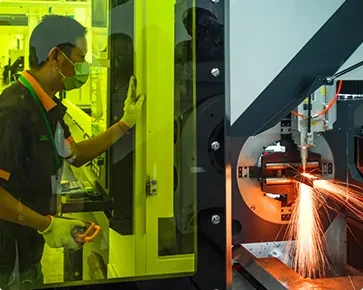
What Factors Affect Stainless Steel Laser Cutting Edge Quality?
Several processing conditions influence the appearance, smoothness, and consistency of laser-cut stainless steel edges.
Identifying these factors helps manufacturers determine which adjustments are needed to improve cutting results.
Laser Power and Cutting Speed
Laser power determines the energy delivered to the material, while cutting speed affects how long that energy interacts with the sheet. If the power is insufficient for the selected speed and material thickness, the laser may fail to cut through completely. Excessive heat input can also contribute to a wider heat-affected area and less desirable edge conditions. Matching power and speed to the material is essential for producing clean, continuous cuts.
Focus Position and Nozzle Condition
The focus position determines where the laser beam concentrates its energy within the material. An unsuitable focal position can affect the kerf profile, melt formation, and cutting consistency. Nozzle condition and alignment also matter because they influence how assist gas reaches the cutting area. Worn, damaged, or misaligned nozzles can disrupt gas flow and contribute to uneven edges or residual slag.
Assist Gas Selection and Pressure
Assist gas helps remove molten material from the cutting kerf and influences the resulting edge finish. Nitrogen is commonly used when processing stainless steel that requires a bright, low-oxidation edge, while oxygen can produce different cutting characteristics depending on the application. Gas purity and pressure must also match the material thickness, nozzle configuration, and cutting parameters. Incorrect settings can leave dross, increase oxidation, or reduce cutting stability.
How Can You Optimize Cutting Parameters for Cleaner Edges?
Improving edge quality requires a systematic approach to parameter adjustment. Rather than changing several settings at once,
manufacturers can evaluate individual variables through test cuts and use the results to refine the cutting process.
Match Parameters to Sheet Thickness
Different stainless steel thicknesses require different combinations of laser power, cutting speed, focal position, and gas pressure. Thicker sheets generally require more energy and carefully controlled melt removal, while thinner sheets may need higher speeds and lower heat input. Start with recommended parameters for the specific machine and material, then make adjustments based on the actual cutting results.
Balance Speed and Power
Cutting speed and laser power should be optimized together rather than independently. Excessive speed can cause incomplete cuts, rough edges, or inconsistent penetration, while unnecessarily low speeds can increase heat input and affect edge appearance. Test cuts at several suitable settings help identify a stable operating range that balances cutting completeness, edge finish, and production efficiency.
Adjust Gas Pressure and Focus
If the cut edge shows oxidation, roughness, or bottom-side dross, review the assist gas type, purity, pressure, nozzle condition, and focal position. Nitrogen cutting often requires sufficient gas pressure to remove molten stainless steel efficiently and limit oxidation. The optimal settings depend on sheet thickness, laser power, nozzle geometry, and the required edge finish, so adjustments should be validated through sample cutting.
Inspect and Refine Test Cuts
Examine test pieces for edge roughness, burrs, dross, discoloration, and dimensional accuracy. The direction and consistency of the striations on the cut surface can also provide clues about process stability. Change one parameter at a time where practical, record the results, and establish validated settings for recurring material grades and thicknesses. This approach helps reduce repeated trial and error during production.
How Does a Stainless Steel Laser Cutting Machine Improve Edge Quality?
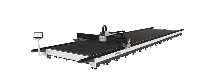
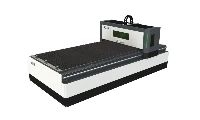
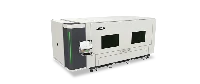
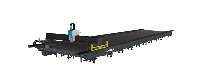
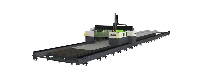
The machine's mechanical structure, motion control, and cutting head influence how consistently the selected processing parameters can be maintained. The following features are particularly relevant when evaluating equipment for stainless steel fabrication.
- Stable CNC Motion Control - A responsive CNC motion system coordinates the laser head's movement along the programmed cutting path. Accurate, consistent motion helps maintain dimensional precision when cutting intricate contours, small features, and repeated parts, reducing variations caused by unstable movement.
- Automatic Focusing Laser Cutting Head - An automatic focusing cutting head helps adjust the focal position to suit different processing conditions. When correctly configured with the appropriate nozzle and cutting parameters, it supports consistent energy delivery and helps maintain the required kerf profile across different stainless steel thicknesses.
- Rigid Machine Bed and Beam - A rigid machine bed and a suitably designed beam help control vibration during high-speed movement. Reduced mechanical disturbance supports more stable cutting paths, particularly when processing complex geometries or producing multiple parts that require consistent dimensions and edge conditions.
- Effective Dust Extraction System - Timed, zoned, or follow-up dust extraction helps remove smoke and particles generated during laser cutting. Although extraction does not directly determine the cut edge, effective fume management helps maintain a cleaner working environment and supports reliable operation in production workshops.
What Should You Consider When Choosing a Stainless Steel Laser Cutting Machine?
Selecting the right machine requires matching its capabilities to the stainless steel grades, sheet thicknesses, edge quality requirements, and production volume.
- Laser Power and Thickness Range - Choose laser power based on the thicknesses and cutting speeds required for regular production. Higher power can support thicker materials and faster processing, but edge quality also depends on the cutting head, assist gas, and parameter settings.
- Cutting Accuracy and Motion Performance - Evaluate the CNC system, positioning performance, and machine rigidity. Stable motion helps maintain dimensional consistency when cutting intricate contours, small holes, and repeated parts.
- Cutting Head and Process Configuration - Check the focusing capabilities, nozzle compatibility, and assist gas control. These features help operators adjust cutting conditions to suit different stainless steel thicknesses and edge finish requirements.
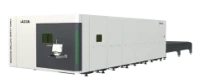
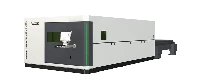
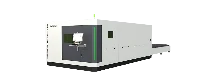
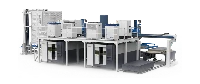
- Worktable Size and Production Workflow - Select a working area that accommodates the sheet sizes used in production. For higher-volume operations, a dual-platform configuration may help reduce loading and unloading downtime, depending on the machine design.
- Machine Configuration and Technical Support - Compare machine configurations, maintenance requirements, and technical documentation. Clear operating guidance and accessible support help maintain consistent cutting performance.
Conclusion
Improving stainless steel laser cutting edge quality requires the right combination of cutting speed, laser power, focal position, assist gas, and equipment performance. By optimizing processing parameters and selecting a machine with stable CNC motion, a suitable cutting head, and effective dust extraction, manufacturers can achieve more consistent cutting results and reduce secondary finishing. QLTEK offers sheet metal laser cutting machines with different power levels and configurations to meet varied metal fabrication requirements. Contact us to discuss your stainless steel cutting needs and find a suitable machine for your material thickness, edge quality targets, and production requirements.