

Introduction
Stainless steel is widely used in sheet metal fabrication, automotive components, electrical enclosures, and architectural metalwork. Its corrosion resistance and mechanical strength make it suitable for products that require both durability and a refined appearance. However, fabricating these components involves more than cutting basic outlines. Manufacturers must also consider edge quality, dimensional consistency, and heat-related deformation. Fiber laser cutting provides a precise and adaptable method for processing stainless steel sheets into different shapes and components.

What Stainless Steel Components Can Fiber Laser Cutting Produce?
Fiber laser cutting is suitable for producing a broad range of stainless steel components across different fabrication sectors. In electrical equipment manufacturing, it processes cabinet panels and metal enclosures with mounting holes, ventilation openings, and cable entry slots. Automotive and industrial applications include exhaust parts, brackets, and structural fittings that require accurate contours and connecting features. For architectural and decorative projects, the process can create screens, partitions, railings, door panels, and wall cladding with intricate patterns or customized outlines. Since these shapes can be generated from digital drawings, manufacturers can handle different designs and batch sizes without requiring dedicated stamping dies for each component.

What Cutting Results Matter Most in Stainless Steel Fabrication?
The suitability of a laser-cut component depends not only on whether the required shape can be produced, but also on the condition of the finished edge and its compatibility with subsequent processes. Several quality factors deserve attention during production.
Edge Oxidation and Surface Finish
The cutting gas has a direct influence on the condition of the cut edge. Nitrogen is commonly selected when a cleaner, lower-oxidation edge is required, while oxygen may produce an oxidized edge that needs additional treatment. The appropriate choice depends on the stainless steel grade, sheet thickness, cutting parameters, and downstream requirements such as welding, polishing, or coating.
Burr and Dross Formation
Burrs and dross can remain along the lower edge when cutting parameters are not properly matched to the material and thickness. Laser power, cutting speed, focal position, nozzle condition, and gas pressure all affect the amount of residue produced. Excessive buildup increases grinding and cleaning work, adding labor costs and potentially slowing the transition to bending or assembly.
Dimensional Accuracy and Repeatability
For components with multiple holes, slots, and connection points, dimensional accuracy directly affects assembly compatibility. A stable CNC motion system helps maintain the programmed cutting path, while consistent machine positioning supports repeatable results across production batches. This is especially important for electrical enclosures and industrial parts that must align with other components during installation.
Heat Input and Sheet Distortion
Although laser cutting concentrates heat in a relatively small area, excessive or poorly controlled heat input can still cause local deformation. Thin sheets and parts with narrow sections or dense cutting patterns may be particularly sensitive. Appropriate power and speed settings, together with an optimized cutting sequence and sufficient spacing between features, help limit heat accumulation and maintain sheet flatness.
Which Machine Systems Help Maintain Consistent Cutting Results?
Cutting quality is influenced by the coordination of several machine systems rather than a single specification. The laser source, cutting head, motion structure, and auxiliary equipment all contribute to stable processing.
Laser Source and Automatic Focusing Head
The laser source provides the energy required to melt or vaporize the material along the cutting path. Its power should be matched to the stainless steel thickness and the required processing speed. An automatic focusing cutting head adjusts the focal position according to processing conditions, while features such as water cooling, multi-layer protective lenses, and temperature monitoring help protect optical components during operation.
CNC Motion System and Cutting Path Control
The CNC system converts digital drawings into cutting instructions and controls the movement of the cutting head. It coordinates straight lines, curves, holes, and complex contours while maintaining the programmed path. Stable motion and accurate positioning are important for producing components with consistent dimensions, particularly when the same design must be repeated across multiple sheets.
Machine Bed and Beam Structure
The machine bed provides the structural foundation for cutting operations. A precision-welded bed helps maintain rigidity and reduce vibration during movement. Beam design also affects machine performance: aluminum beams offer a lighter structure, while steel beams provide greater rigidity. Adaptive support feet with double-spherical pads can further help minimize shock and vibration.
Auxiliary Systems for Continuous Operation
Auxiliary equipment supports machine operation beyond the cutting process itself. Automatic lubrication helps maintain moving components and reduces the need for frequent manual maintenance. Timed dust extraction, including dual-side or follow-up extraction depending on the machine design, helps remove fumes and particles generated during cutting and maintain a cleaner working area.
How to Select a Stainless Steel Laser Cutting Machine for Your Production Line?
Machine selection should reflect the actual workload rather than relying on laser power alone. Sheet dimensions, production volume, material thickness, and the required level of automation all influence the most suitable configuration.
- Laser Power and Processing Requirements - Match the power range to the stainless steel grades and thicknesses processed regularly, while considering the required cutting speed and edge condition.
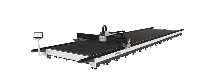
- Working Area and Sheet Format - Confirm that the table dimensions accommodate commonly used sheet sizes and the largest workpieces in the production plan.
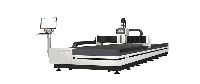
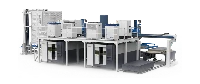
- Single or Dual Platform Design - Consider a dual-platform configuration when frequent loading and unloading interrupt cutting operations, and higher production throughput is required.
- Cutting Head and Control Configuration - Evaluate focusing functions, optical protection, laser source compatibility, and CNC control according to the complexity and consistency requirements of the work.
Conclusion
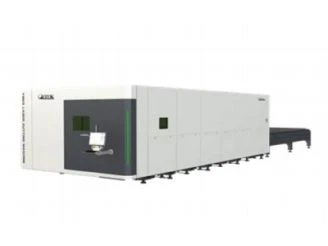
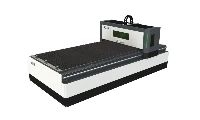
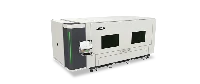
Producing stainless steel components with consistent quality requires more than sufficient laser power. Manufacturers must consider the types of parts being processed, edge oxidation, burr formation, dimensional repeatability, and heat-related deformation. These requirements should then guide the selection of the laser source, cutting head, motion system, machine structure, and overall configuration. QLTEK provides sheet metal laser cutting machines with configurable power options ranging from 1.5 to 80 kW, different working areas, and single- or dual-platform designs. Its available configurations also include automatic focusing cutting heads, precision-welded machine beds, and auxiliary systems for ongoing operation. Contact us to discuss your stainless steel processing requirements and identify a suitable machine configuration.