

Introduction
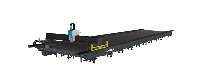
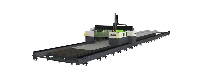
As industrial manufacturing increasingly involves thicker metal plates and larger components, high-power fiber laser cutting has become an important processing method. A 20kW laser source delivers substantial energy for demanding plate-cutting tasks, making it possible to process heavier materials at higher speeds. However, efficient high-power cutting also relies on machine rigidity, motion performance, focusing technology, and auxiliary systems. These elements work together to determine how consistently the machine performs during intensive production.

How Does 20kW Laser Power Improve Industrial Plate Cutting Performance?
Laser power determines how much energy is delivered to the material during cutting. With a 20kW source, the concentrated laser beam can penetrate thicker plates more effectively and support faster processing when the cutting parameters are properly matched to the material.
Higher Cutting Speeds - When cutting medium and thick plates, greater laser power can increase the cutting speed and shorten processing cycles. This is especially valuable in production environments where large quantities of metal components need to be processed within tight schedules.
A Broader Range of Processing Tasks - High-power equipment can accommodate a wider range of plate thicknesses, allowing manufacturers to handle different component requirements on the same production line. This is useful for fabrication businesses that process varied orders rather than focusing on a single material specification.
Which Machine Structures Support Stable High-Power Cutting?
High-power laser cutting places considerable demands on the machine structure. During continuous operation, the bed, crossbeam, and support system must work together to withstand equipment loads, control vibration, and maintain the stability required for accurate processing.
Rigid Welded Machine Bed
The machine bed supports the cutting table, motion components, and other major assemblies. A rigid welded structure provides a stable foundation for these components and helps limit deformation during heavy-duty operation. This stability becomes particularly important when cutting large metal sheets, as even small structural movements can affect the relationship between the cutting head and the workpiece.
Lightweight High-Strength Crossbeam
The crossbeam carries the cutting head and its associated moving components. Aluminum alloy is widely used in high-speed laser cutting equipment because it combines strength with relatively low weight. Reducing the moving mass allows the drive system to accelerate and change direction more responsively, helping the machine maintain efficient movement along complex cutting paths.
Vibration-Controlled Support Structure
The support system distributes the machine's weight and helps maintain a stable operating position. During rapid acceleration and deceleration, it also plays a role in limiting vibration transmitted through the machine structure. Designs incorporating self-adaptive support feet and double spherical gaskets help absorb impact, supporting more stable operation during demanding cutting cycles.
How Do Motion and Focusing Systems Maintain Cutting Precision?
Fast and accurate cutting depends on how smoothly the machine moves and how effectively the laser maintains its focal position. The X/Y drive system controls the cutting head's movement, while the focusing unit adapts the beam to different material thicknesses. Together, they help maintain consistent cutting paths and efficient processing.
X/Y Axis Movement and Acceleration
The X/Y axis system controls the cutting head as it follows contours and moves between separate cutting areas. Smooth acceleration, deceleration, and direction changes help reduce idle travel time, particularly when a sheet contains multiple components or complex cutting paths. A well-coordinated drive system allows the cutting head to move efficiently between processing points while maintaining stable motion throughout the cutting cycle.
Positioning Accuracy and Repeatability
Accurate positioning ensures that the cutting head follows the programmed path and produces components with consistent dimensions. This is especially important when processing parts with detailed contours, small openings, or repeated hole patterns. A precise motion system helps reduce deviations between the programmed design and the finished component, supporting consistent results across successive production batches.
Automatic Focusing Adjustment
Different plate thicknesses require different focal positions to achieve effective cutting. An auto-focusing cutting head adjusts the focal position to suit the processing conditions, helping concentrate laser energy at the appropriate point within the material. This reduces the need for manual adjustments when switching between different cutting tasks and makes it easier to maintain consistent processing conditions.
Which Auxiliary Systems Support Continuous Machine Operation?
The performance of a high-power laser cutting machine also depends on the systems that support its daily operation. Lubrication, dust extraction, and workbench design all contribute to equipment maintenance, workshop conditions, and production continuity.
Automatic Lubrication
Guide rails and other moving components operate under repeated motion and require regular lubrication to limit friction and wear. An automatic lubrication system supplies lubricant at scheduled intervals, helping maintain smooth movement while reducing the need for frequent manual maintenance. This is particularly useful in production environments where machines operate for extended periods.
Segmented Dust Extraction
Laser cutting generates smoke, fumes, and metal particles that need to be removed from the processing area. Segmented dust extraction directs airflow toward the active cutting zone, capturing pollutants closer to their source. By dividing the extraction area into sections, the system can focus ventilation where cutting is taking place rather than drawing air uniformly across the entire workbench.
Split-Type Workbench
The workbench supports metal sheets throughout the cutting process and must withstand repeated loading and unloading. A split-type structure divides the working surface into separate sections, making individual sections easier to maintain or replace when necessary. It also provides a practical arrangement for supporting heavy workpieces during industrial plate processing.
Which Industrial Plate Processing Tasks Benefit Most from a 20kW Laser Cutting Machine?
The capabilities of a 20kW laser source are particularly relevant to production tasks involving thick materials, large workpieces, or substantial processing volumes. These applications can make better use of the cutting capacity and processing speed offered by high-power equipment.
Large-Format Plate Cutting - Manufacturers producing oversized structural parts or large equipment panels benefit from a spacious working area. Processing larger sheets in one setup can reduce repeated repositioning and make better use of the available material.
High-Volume Component Production - Industries producing repeated metal components need both efficient cutting speeds and consistent positioning. High laser power helps shorten processing cycles, while responsive axis movement supports faster transitions between cutting paths and individual parts.
Conclusion
A 20kW high-power sheet metal laser cutting machine offers strong capabilities for thick-plate fabrication, large-format processing, and demanding production schedules. Its overall performance, however, comes from the combined work of the laser source, machine structure, motion and focusing systems, and auxiliary equipment. Understanding how these elements contribute to cutting quality and operational efficiency helps manufacturers assess whether high-power equipment matches their production requirements. QLTEK offers sheet metal laser cutting machines with different power levels, working areas, and structural configurations for industrial plate processing. Contact us to explore high-power laser cutting solutions for your manufacturing needs.