


Introduction
As sheet metal production moves toward higher efficiency and shorter delivery cycles, manufacturers are looking beyond the cutting machine alone. Material storage, sheet loading, finished-part unloading, and production coordination all influence production-line performance. An automatic sheet metal laser cutting system connects these stages through integrated storage and material-handling equipment, reducing manual transfers and creating a more consistent workflow.

Which Production Stages Can an Automatic Sheet Metal Laser Cutting System Handle?
An automatic system can manage several connected operations, from raw material storage to finished-part handling. Its configuration depends on sheet dimensions, material weight, production volume, and factory layout.
1. Raw Material Storage and Sorting
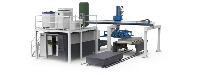
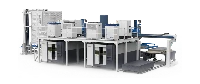
Automated storage systems organize carbon steel, stainless steel, and aluminum sheets by material type or dimensions. Tower and horizontal rack systems provide designated storage locations, making sheets easier to identify and retrieve while reducing scattered material storage.
2. Automatic Sheet Retrieval and Loading
When a cutting task requires a particular sheet, the storage system supplies it to the loading unit. Robotic arms with vacuum suckers or magnetic grippers transfer sheets to the laser cutting machine. The gripping method depends on material properties, sheet size, and handling weight.
3. Finished-Part Unloading and Separation
After cutting, the unloading unit removes processed sheets or components from the cutting area. Finished parts can be separated from the remaining skeleton or scrap, simplifying collection and preparing the machine for the next production cycle.
4. Scrap Collection and Leftover Sheet Recovery
Scrap can be transferred to designated pallets, while suitable leftover sheets are returned to storage for future jobs. Separating these material flows keeps the work area organized and helps recover reusable material.
How Do Different Storage Layouts Support Automated Material Supply?
Storage layout affects how raw sheets are stored, retrieved, and transferred to the cutting machine. Tower and horizontal rack systems use different structures and retrieval methods, influencing storage density and material flow.
|
Comparison |
Tower Storage System |
Horizontal Rack Storage System |
|
Storage Arrangement |
Vertically stacked, multi-layer storage |
Horizontally arranged storage racks |
|
Space Utilization |
Uses vertical space to increase storage density |
Extends storage along horizontal rack rows |
|
Material Retrieval |
A lifting mechanism accesses selected storage layers |
A shuttle or AGV travels along racks to retrieve materials |
|
Transfer Route |
Rack → Lift → Loading Robot → Laser Cutting Machine |
Rack → Shuttle/AGV → Loading System → Laser Cutting Machine |
|
Material Access |
Retrieves sheets by storage layer |
Accesses materials at different rack locations |
|
Layout Requirements |
Requires sufficient installation height |
Requires floor space for racks and transfer routes |
How Does Automated Material Handling Improve Laser Cutting Efficiency?
Automating material movement can reduce non-cutting time, improve material recovery, and make the connection between storage and processing more predictable.
Reduced Manual Handling
Large metal sheets require suitable lifting equipment and careful handling. Automated loading and unloading systems take over repetitive transfers between storage and the cutting area, reducing manual work and related coordination. Operators can focus more on machine supervision and production checks.
Shorter Loading and Unloading Intervals
Preparing raw sheets and removing finished parts can limit a machine's effective operating time. Automated storage retrieves the required sheet, while loading and unloading units transfer materials to and from the cutting area. Coordinating these tasks reduces waiting time between cutting jobs.
Improved Material Utilization
An automated system can separate finished components from scrap and return suitable leftover sheets to storage. This makes reusable material easier to identify and retrieve for later jobs. Dedicated scrap collection also reduces material accumulation around the machine.
More Organized Internal Logistics
Connecting storage, loading, cutting, and unloading establishes clearer transfer routes. It reduces unnecessary movement between work areas and limits temporary sheet storage beside the machine. This is useful for factories handling different sheet types and frequent production changes.
How Does Production-System Integration Support Smart Manufacturing?
Physical automation manages material movement, while digital integration coordinates material and production information. Connections with enterprise resource planning (ERP) or manufacturing execution system (MES) platforms can support more centralized management.
Material Inventory Tracking
Integration with inventory systems helps record material types, dimensions, and available quantities. Production planners can check stock before scheduling jobs and identify potential shortages earlier, reducing the need to confirm material availability manually for each task.
Automated Material Scheduling
Production requirements can be linked with material allocation and retrieval tasks. Based on upcoming cutting jobs, the system can coordinate which sheets need to be supplied and when they should reach the cutting area, aligning material preparation with the production schedule.
Production and Equipment Coordination
MES integration can enable information exchange between material-handling equipment and connected production systems. Managers gain better visibility into job progress and equipment status, making it easier to coordinate material supply with cutting operations. Functions depend on the connected systems and integration scope.
What Are the Benefits of Choosing an Automatic Sheet Metal Laser Cutting System?
For manufacturers with frequent sheet changes or substantial material-handling requirements, an integrated system offers benefits beyond automating individual operations.
Better Use of Factory Space - Automated storage provides designated locations for raw sheets and reduces scattered material storage. Vertical tower arrangements can also use available height to increase storage density where floor space is limited.
Conclusion
An automatic sheet metal laser cutting system connects raw material storage, sheet loading, laser processing, unloading, and production management in one workflow. This integration can reduce manual handling, shorten non-cutting intervals, improve material recovery, and make better use of factory space. The right configuration depends on sheet specifications, storage capacity, production volume, and factory layout. With over 17 years of experience in fiber laser cutting and industrial automation, QLTEK provides turnkey metal laser cutting line solutions integrating material feeding, laser cutting, unloading, and storage. Contact us to discuss an automatic sheet metal laser cutting solution for your production line.