


Introduction
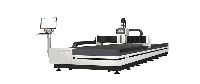
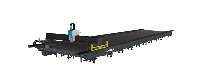
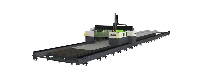
Aluminum alloys are widely used in automotive components, industrial equipment, electrical enclosures, and other metal fabrication applications. Their lightweight properties and corrosion resistance make them suitable for products that require strength without excessive weight. However, their high reflectivity and thermal conductivity create challenges during laser processing, affecting energy absorption and heat distribution. An aluminum laser cutting machine uses fiber laser technology, precision cutting components, and a coordinated motion system to process these materials. Understanding the machine's key features helps manufacturers select equipment according to their material thickness, cutting quality, and production requirements.
What Makes Aluminum Alloy Challenging to Laser Cut?
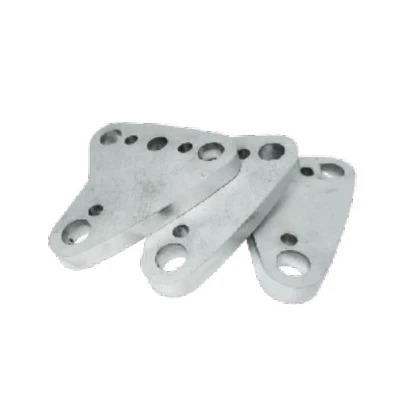
Aluminum alloys present several processing challenges due to their physical properties. Their relatively high reflectivity, particularly on polished surfaces, means that some incident laser energy may be reflected rather than absorbed, making stable energy coupling and optical protection important. Their high thermal conductivity also allows heat to spread quickly away from the cutting area, affecting the melting process and heat concentration. In addition, different alloy grades, surface conditions, and sheet thicknesses influence how the material responds to laser energy. These characteristics make laser power, focal position, cutting speed, and assist gas selection important factors in aluminum laser cutting.
How Does a Fiber Laser Cutting Machine Process Reflective Aluminum Alloys?
Fiber laser cutting relies on coordinated control of laser energy, beam focus, and cutting movement. Several core components work together to process aluminum sheets with different specifications.
Fiber Laser Source and Power Matching
The fiber laser source generates the concentrated energy needed to melt and separate metal along the cutting path. Its high energy density and available power configurations make it suitable for processing different sheet thicknesses. When cutting aluminum, power selection should account for the alloy grade, material thickness, and required cutting speed. Insufficient power may cause incomplete penetration, while excessive power can increase energy consumption and affect edge quality. A suitable balance helps achieve the required cutting performance.
Automatic Focusing Laser Cutting Head
The cutting head focuses the laser beam onto the aluminum sheet, and its focal position directly affects energy density and kerf formation. An automatic focusing head adjusts the focal position according to processing requirements, reducing repeated manual adjustments between different jobs. Optical protection is also important when processing reflective alloys. Multi-layer protective lenses, water-cooling coverage, and temperature monitoring help protect critical optical components and support stable operation.
CNC Control and Cutting Path Accuracy
The CNC control system directs the cutting head according to programmed geometries and processing parameters. For aluminum components with slots, holes, and complex contours, accurate path execution helps maintain dimensional consistency. The system also allows operators to manage different cutting programs and monitor machine operation. Combined with a properly configured motion system, it supports precise movement across the working area.
Which Machine Features Help Maintain Cutting Stability?
Beyond the laser system, mechanical structures and auxiliary components influence equipment
stability and processing consistency during repeated operations.
Precision-Welded Machine Bed
The machine bed supports the worktable and main motion components. Its structural rigidity helps reduce vibration and maintain stable movement during cutting. Precision-welded designs provide a solid foundation, while segmented bed configurations accommodate different machine layouts. The appropriate structure depends on the model and its intended production requirements.
High-Strength Beam and Adaptive Support Feet
The crossbeam carries the cutting head, so its weight and rigidity affect movement speed and stability. Aluminum beams provide a lightweight structure for dynamic movement, while steel beams offer greater rigidity for different application requirements. Adaptive support feet with a double-spherical pad design help reduce operational shocks and vibration, supporting smoother machine movement.
Automatic Lubrication and Dust Extraction
An automatic lubrication system supplies lubricant to designated moving components at controlled intervals, helping reduce friction and mechanical wear. Dust extraction removes smoke and particles generated during laser cutting. Dual-side and follow-up extraction designs help collect emissions around the processing area, contributing to a cleaner workshop environment and more convenient equipment maintenance.
How to Configure an Aluminum Laser Cutting Machine for Different Production Needs?
The right configuration depends on the materials, sheet formats, and production volume involved. Buyers should consider several factors together rather than selecting a machine based only on its maximum laser power.
- Laser Power and Aluminum Thickness - Match the laser power to the aluminum grades and thicknesses processed regularly, while considering the required cutting speed and edge quality.
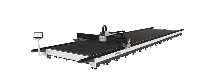
- Working Area and Sheet Dimensions - Select a worktable that accommodates standard sheet sizes, the largest planned workpieces, and the space required for positioning materials during production.
- Cutting Head and Control System - Compare focusing functions, optical protection, cooling arrangements, and CNC capabilities to ensure they suit the required cutting precision and operating conditions.
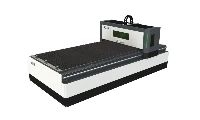
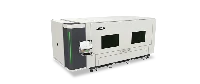
- Single/Dual Platform and Material Handling - Choose the platform layout according to batch volume and sheet change frequency, taking into account how loading and unloading tasks fit into the existing production workflow.
Conclusion
Selecting an aluminum laser cutting machine requires an understanding of material behavior and equipment performance. Aluminum's reflectivity and thermal conductivity make suitable laser power, focal positioning, and cutting parameters important, while machine rigidity, beam construction, and auxiliary systems support stable operation. Buyers should also consider working area, platform layout, and production volume when comparing configurations. QLTEK offers fiber laser sheet metal cutting machines compatible with aluminum and other metal materials, with power configurations ranging from 1.5 kW to 80 kW, different worktable sizes, and single- or dual-platform options. Its product range also includes Raycus fiber laser sources, automatic focusing cutting heads, precision-welded machine beds, and automatic lubrication systems. Contact us to discuss your aluminum alloy grades, sheet thicknesses, and production requirements, and identify a suitable laser cutting machine configuration.