


Introduction
In sheet metal fabrication, the productivity of a laser cutting machine depends on several factors beyond its cutting speed. Sheet dimensions, batch sizes, job changes, and material handling arrangements all influence how efficiently a production line operates. For manufacturers processing multiple sheets in succession, the worktable layout can affect the coordination between cutting tasks and material preparation. An exchange table design provides an alternative to conventional single-table equipment, making it an important consideration when evaluating machine layouts for different production requirements.
How Does an Exchange Table Sheet Metal Laser Cutting Machine Work?
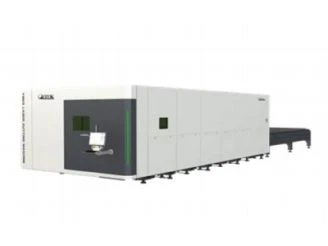
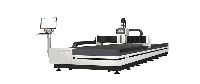
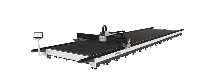
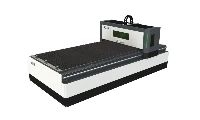
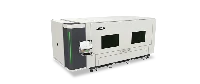
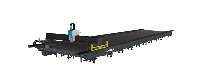
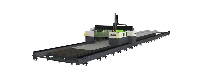
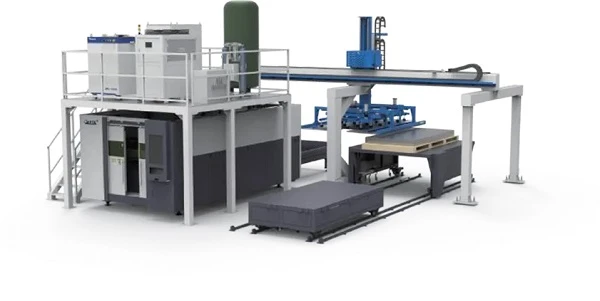
An exchange table sheet metal laser cutting machine is equipped with two work platforms connected by a mechanical exchange system. During operation, one platform is positioned in the cutting area beneath the laser head, while the other remains at the loading and unloading position. After the cutting cycle is completed, the exchange mechanism moves the platforms so that the processed sheet leaves the cutting area and the prepared sheet takes its place. The machine then begins the next cutting cycle on the newly positioned platform. The two platforms alternate between these positions rather than performing laser cutting simultaneously. The specific exchange mechanism and movement sequence depend on the machine design.
How Does an Exchange Table Improve Sheet Metal Production Efficiency?
The main production advantage of an exchange table comes from how it reorganizes tasks around the cutting cycle. Rather than changing the cutting speed itself, the design helps manufacturers manage the time and labor involved in preparing successive sheets.
Reducing Changeover Downtime
On a single-table machine, operators generally need to wait until cutting is complete before removing the processed sheet and positioning the next one. These operations extend the interval between cutting cycles, particularly when sheets are large or finished parts require additional removal work. An exchange table provides a separate platform for material preparation, allowing part of this work to be completed before the next cutting cycle begins. Although the exchange movement and sheet preparation still require time, the machine is less dependent on completing every handling task after cutting stops.
Preparing the Next Sheet in Advance
Production readiness also depends on whether the next sheet is prepared when the machine finishes its current job. The alternate platform provides space for operators to position the material, check its orientation, and prepare it for the next cutting program. This helps reduce delays caused by incomplete material preparation or last-minute adjustments. The benefit is most noticeable when sheet preparation can be completed within the time required for the current cutting job.
Matching Handling Time to Cutting Time
An exchange table does not automatically eliminate all production interruptions. Its practical benefit depends on the relationship between cutting time and material handling time. If operators need longer to remove finished parts, clear the sheet skeleton, or position the next sheet than the machine needs to complete a cutting cycle, the equipment may still have to wait. Manufacturers should therefore evaluate the complete handling process, including operator availability and downstream part removal, when estimating the potential productivity improvement.
Single-Table vs. Exchange-Table Laser Cutting Machines
|
Comparison Factor |
Single-Table Machine |
Exchange-Table Machine |
|
Platform Arrangement |
Uses one platform for cutting and material handling. |
Uses two platforms that alternate between the cutting and loading positions. |
|
Job Preparation |
The next sheet is generally prepared after the current sheet is removed. |
The next sheet can be prepared on the alternate platform before the current cycle ends. |
|
Operator Scheduling |
Handling tasks are concentrated around machine stoppages. |
Handling tasks can be coordinated with the active cutting cycle. |
|
Production Fit |
Suitable for workloads with less frequent sheet changes. |
Better suited to repeated sheet processing where material preparation can overlap with cutting. |
Which Machine Features Support Stable Cutting During Continuous Operation?
The exchange mechanism determines how sheets move through the machine, but it does not directly determine cutting accuracy. Structural design, motion performance, and auxiliary systems all contribute to consistent processing quality over extended operating periods.
Rigid Machine Bed and Beam Structure
The machine bed supports the main mechanical components and provides the foundation for accurate movement. Adequate structural rigidity helps limit deformation and vibration that could affect positioning during cutting. The crossbeam also influences the machine's dynamic performance because it carries the cutting head and moves along the working area. Depending on the machine design, aluminum or steel beams may be used to balance structural strength, weight, and movement requirements.
Stable Motion at High Cutting Speeds
The motion system determines how accurately the cutting head follows programmed paths, particularly when processing complex contours or making frequent directional changes. Guide rails, transmission components, and drive systems need to work together to maintain smooth movement and positioning accuracy. At higher speeds, excessive vibration or unstable acceleration can affect the consistency of the cutting path. A well-matched motion system therefore matters not only for processing speed but also for maintaining dimensional accuracy across different cutting patterns.
Automatic Lubrication and Dust Extraction
Automatic lubrication supplies lubricant to designated mechanical components at scheduled intervals, helping control friction and wear in parts such as guide rails and transmission systems. Dust extraction serves a different purpose: it removes smoke and particles generated during laser processing. Depending on the extraction arrangement, suction can be directed toward the active cutting area to improve the collection of airborne contaminants. These systems support routine machine maintenance and help maintain a cleaner production environment.
Cutting Head and Sheet Support
The cutting head affects how the laser beam is focused onto the material. An automatic-focusing head can adjust the focal position according to the processing requirements, while protective lenses and cooling arrangements help maintain the condition of optical components. Sheet support is equally important because uneven or poorly supported material can affect the distance between the cutting head and the workpiece. A suitable support arrangement helps keep the sheet properly positioned throughout the cutting process.
How to Configure an Exchange Table Sheet Metal Laser Cutting Machine for Different Production Needs?
Machine configuration should reflect the materials and sheet formats involved in regular production, rather than relying on a single specification such as maximum laser power. Buyers can assess the following factors when comparing available models.
- Laser Power and Material Thickness - Match power to the material types and thicknesses processed most frequently.
- Working Area and Sheet Dimensions - Select a table size that accommodates standard sheet formats and planned production tasks.
- Laser Source and Control System - Check component specifications and control functions against the required cutting performance.
- Loading and Automation Level - Choose handling arrangements according to production volume, labor availability, and workflow requirements.
Conclusion
An exchange table sheet metal laser cutting machine offers a different approach to organizing sheet processing by separating material preparation from the active cutting position. Its production value depends on whether handling tasks can be coordinated with cutting cycles, while structural rigidity, motion performance, and auxiliary systems remain important to processing accuracy and operational reliability. Buyers should consider these factors alongside material requirements, sheet dimensions, and expected production volume when selecting equipment. QLTEK offers sheet metal laser cutting machines with single- and dual-platform configurations, laser power options from 1.5 kW to 80 kW, and different working-area specifications. Contact us to discuss your processing requirements and identify a suitable laser cutting machine configuration for your production needs.