


Introduction
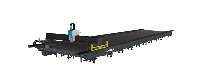
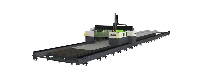
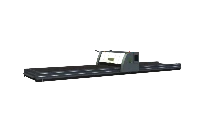
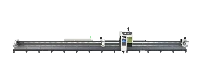
In metal fabrication, production efficiency depends not only on laser cutting speed but also on how materials move through the manufacturing process. Manual sheet handling, material preparation, and finished-part removal can add time between cutting operations, particularly in facilities processing large volumes of metal. Automatic loading and unloading systems help reduce these handling tasks by transferring materials to and from laser cutting machines. Depending on their configuration, they may provide basic sheet feeding, combined loading and unloading, or more comprehensive material storage and sorting functions. Understanding these differences is essential when evaluating automation options for an industrial production line.

How Does an Automatic Loading and Unloading Laser Cutting Machine Work?
The operating process varies according to the system design. A typical sheet metal handling solution may involve the following stages:
What Key Features Make an Automatic Loading and Unloading System More Efficient?
Different automation systems vary in their mechanical structures, handling capabilities, and integration levels. Buyers should evaluate the following features rather than assuming that every system offers the same functions.
Material Gripping and Loading Methods
The loading mechanism determines how raw materials are picked up and transferred to the cutting machine. Vacuum suction cups are commonly used for suitable sheet surfaces, while magnetic lifting devices can handle compatible ferrous materials. The appropriate method depends on sheet dimensions, weight, surface condition, and material type. Buyers should also check whether the system can separate individual sheets reliably, particularly when handling thin sheets that may stick together.
Unloading and Finished-Part Handling
Automatic unloading does not necessarily mean automatic part sorting. Some systems remove the entire cut sheet or its remaining skeleton from the worktable, leaving operators to separate individual components. More advanced configurations may use robotic arms, sorting heads, or dedicated stacking devices to handle individual parts. The required unloading level should be determined by part size, shape, batch volume, and downstream processing requirements.
Material Storage and Retrieval
Storage arrangements range from simple pallet stations to multi-level storage towers and automated warehouses. Basic loading systems may require operators to replenish raw materials manually, while integrated storage solutions can retrieve materials from designated positions. Larger storage configurations can reduce repeated material transfers and make inventory organization easier, but they also require more floor space, investment, and coordination with the production line.
Machine Compatibility and Control Integration
An automatic loading and unloading system must match the laser cutter's worktable dimensions, loading capacity, transfer structure, and operating cycle. Communication between the automation controller and the laser machine is also important for coordinating loading, cutting, and unloading sequences. More comprehensive production lines may support MES or ERP integration, but this depends on the control architecture and software configuration.
ATR vs. ASR: Which Automatic Loading and Unloading System Fits Your Production Line?
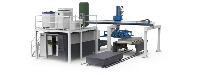
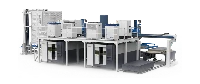
ATR and ASR are two material handling configurations offered by QLTEK. Their differences mainly involve storage structure, material retrieval, and production line arrangement.
|
Comparison |
||
|
Images |

|

|
|
Storage Structure |
Tower storage configuration |
Horizontal rack storage configuration |
|
Material Retrieval |
Central lifting mechanism retrieves materials by layer |
Shuttle/AGV-assisted material retrieval |
|
Loading Method |
Gantry or cantilever structure with vacuum or electro-permanent magnetic grippers |
Automated handling with storage and material distribution |
|
Unloading Method |
Interchangeable high-low trolley |
Single or combined manipulators for loading and unloading |
|
Machine Configuration |
One system serves one cutting machine |
Supports one-to-one and one-to-multiple layouts |
|
Main Advantage |
Centralized vertical storage and material handling |
Expanded storage and more flexible material distribution |
Note: The choice between these systems depends on storage requirements, machine quantity, available floor space, and material flow. Their configurations should be evaluated against the actual production layout rather than compared solely by automation level.
How Does Automated Loading and Unloading Improve Production Efficiency?
When properly matched to production requirements, material handling automation can improve efficiency in several ways:
2. Reducing Machine Idle Time – When loading and unloading operations are coordinated with the cutting cycle, material preparation and removal may take place without extending machine downtime. However, the automation cycle must keep pace with the laser cutter. If material handling takes longer than the cutting cycle, additional waiting time may still occur.
3. Improving Material Flow Management – Organized material storage and defined transfer routes make it easier to manage raw materials, finished sheets, and scrap. Integrated storage systems can further support material retrieval and inventory management when these functions are included in the configuration.
4. Optimizing Labor Allocation – Automating repetitive lifting and transferring tasks reduces operators' physical workload. Workers can instead focus on machine supervision, material preparation, quality inspection, and handling exceptions that still require manual intervention.
Conclusion
An automatic loading and unloading laser cutting system can improve industrial productivity by reducing manual material handling and coordinating the movement of raw materials and processed sheets. However, its actual capabilities depend on the system's automation level, mechanical configuration, material compatibility, and integration with the cutting machine. From basic loading devices to storage-integrated production systems, each solution serves different manufacturing requirements. Selecting the appropriate configuration requires a clear understanding of production volume, material specifications, machine quantity, and available factory space. Contact us to discuss your material handling requirements and explore a suitable automatic loading and unloading solution for your laser cutting production line.