


Introduction
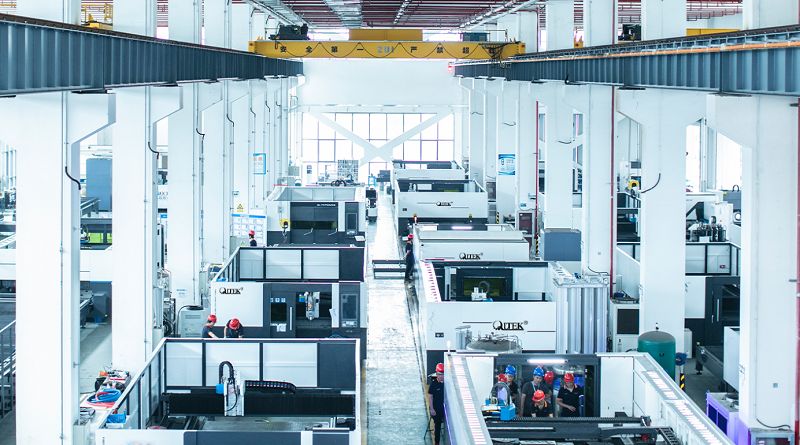
In sheet metal manufacturing, laser cutting is only one stage of the production process. Material storage, sheet loading, finished-part unloading, and scrap handling also affect overall production efficiency. When these operations rely heavily on manual labor, machine downtime and material transfer can limit production capacity. A fully automatic sheet metal laser cutting line integrates these processes through automated storage and material handling equipment, helping manufacturers reduce repetitive operations and establish a more continuous production workflow.

How Does a Fully Automatic Sheet Metal Laser Cutting Line Work?
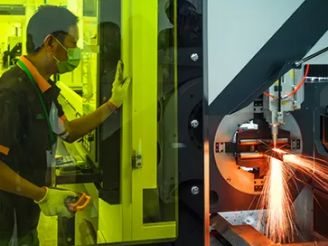
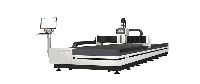
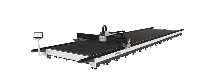
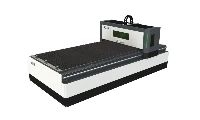
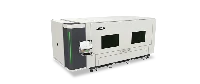
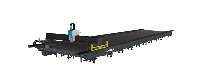
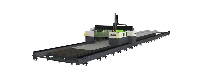
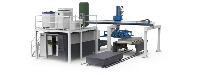
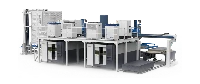
A fully automatic sheet metal laser cutting line connects material storage, loading, cutting, and unloading into an integrated workflow. Raw sheets made of steel, aluminum, or stainless steel are stored in tower or rack systems. When production starts, robotic arms equipped with vacuum suckers or electro-permanent magnets retrieve the required sheets and transfer them to the laser cutting machine. After cutting, finished parts are separated from the remaining scrap, which can be collected and transported for further handling. Reusable leftover sheets can also be returned to storage for future processing. By coordinating these operations, the system reduces manual material transfer and keeps the cutting process supplied with the required sheets.
What Types of Material Handling Systems Are Available for Laser Cutting?
Automatic material handling systems generally differ in whether they focus on loading and unloading around an individual machine or integrate these operations with centralized material storage. The following table outlines their main structural and operational differences.
|
Comparison |
Automatic Loading and Unloading System |
Integrated Storage and Handling System |
|
Basic Structure |
Material transfer equipment connected to a laser cutting machine |
Storage racks or towers combined with automated handling equipment |
|
Material Supply |
Retrieves sheets from a designated loading area or pallet |
Automatically retrieves sheets from the storage system |
|
Machine Connection |
Generally serves an individual cutting machine |
Can support one or multiple cutting machines, depending on the layout |
|
Storage Arrangement |
Usually relies on a separate material staging area |
Provides centralized, multi-level material storage |
|
Material Handling |
Focuses on loading raw sheets and unloading processed materials |
Coordinates storage, retrieval, loading, unloading, and material return |
|
Production Layout |
Relatively straightforward equipment arrangement |
Requires more planning for storage space and material transfer routes |
|
Typical Application |
Factories seeking to automate material handling around an existing cutting machine |
Production facilities requiring higher storage capacity and more integrated material flow |
How Does Automated Material Handling Improve Production Efficiency?
Automating material movement can improve more than the speed of loading and unloading. It also affects machine utilization, material organization, and coordination between production stages.
Reduced Manual Material Handling
Robotic arms and automated transfer equipment handle repetitive sheet lifting and positioning, reducing the need for operators to move heavy metal sheets manually. Vacuum suckers and electro-permanent magnets can be selected according to the material and handling requirements, helping improve transfer consistency and reduce manual handling risks.
Fewer Production Interruptions
Manual loading and unloading can leave a cutting machine waiting between processing cycles. Automated material retrieval and unloading help shorten these non-cutting intervals by preparing incoming sheets and clearing completed workpieces. When loading and unloading operations are coordinated with the cutting cycle, the machine can spend more time on actual processing.
Improved Material Utilization
After cutting, finished parts can be separated from scrap instead of being handled as one mixed load. Scrap collection equipment makes waste materials easier to transport, while reusable leftover sheets can be returned to storage. This makes remaining material easier to identify and retrieve for subsequent orders, helping reduce unnecessary material waste.
More Organized Production Flow
Automated storage and transfer systems help organize raw material supply, work-in-process handling, and finished-part collection. By reducing unnecessary movement between processing stages, manufacturers can improve material flow and make production activities easier to coordinate.
What Factors Should Buyers Consider When Purchasing a Fully Automatic Sheet Metal Laser Cutting Machine?
Selecting an automatic laser cutting solution requires evaluating the cutting machine and material handling equipment as one production system. Buyers should consider the following factors before confirming a configuration.
- Material and Sheet Specifications - Confirm the metal types, sheet dimensions, thickness range, and maximum sheet weight used in daily production to ensure compatibility with the cutting machine and handling equipment.
- Automation Functions - Determine whether the production process requires automatic storage, sheet retrieval, loading, finished-part unloading, scrap collection, and leftover sheet recovery.
- Storage and Handling Capacity - Evaluate storage space, storage layers, load capacity, and material transfer frequency according to inventory levels and production volume.
- Cutting Performance and Machine Compatibility - Match laser power, working area, and processing capacity with the materials and sheet formats handled by the automation system.
- Factory Layout and Material Flow - Consider available floor space, machine positioning, material transfer routes, and the movement of raw sheets, finished parts, and scrap throughout the production area.
Conclusion
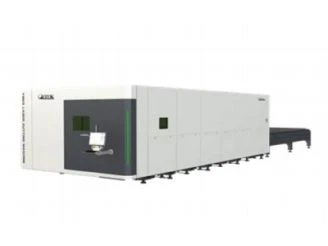
A fully automatic sheet metal laser cutting line combines material storage, robotic loading, laser processing, unloading, and material handling to reduce manual operations and improve workflow continuity. Selecting a suitable system requires consideration of material specifications, automation requirements, storage capacity, cutting performance, and factory layout. QLTEK provides turnkey automated metal laser cutting line solutions integrating material feeding, laser cutting, unloading, and storage. Its configurations can be adapted according to laser power, material handling capacity, CNC controls, and factory space requirements. Contact us to discuss your production needs and find a suitable automated sheet metal processing solution.