
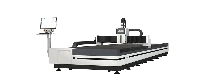
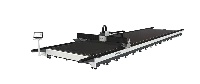
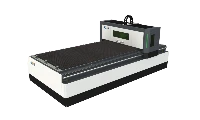
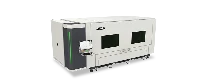






When procurement teams evaluate metal fabrication machinery, looking strictly at the upfront sticker price is a critical mistake. For operations dealing with thick plates and high-volume sheet processing, upgrading to a 20kW, 30kW, or even 40kW machine requires a deep dive into financial performance metrics. Understanding a comprehensive high power fiber laser cutting ROI calculation is essential to uncovering how ultra-high-power technology pays for itself by reducing per-part costs and dramatically increasing throughput.
Why 20kW+ Power Matters: Beyond Just Thick Plates
A common misconception among manufacturing managers is that ultra-high-power lasers are only necessary if you frequently cut metal over 30mm thick. While they do handle massive thicknesses effortlessly, the true economic advantage lies in the processing speed of medium-thickness metals (6mm to 20mm).
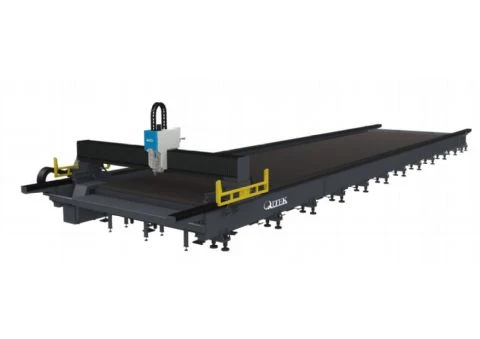
An ultra large format laser cutter efficiency upgrade yields substantial financial gains:
Exponential Speed Gains: A 20kW laser cuts 10mm carbon steel or stainless steel several times faster than an 8kW counterpart, meaning a single machine can output the volume of three lower-power units.
Minimized Overhead Distribution: Because you process more tonnage per hour, fixed factory overhead costs-such as facility rent, factory lighting, and administrative salaries-are distributed across a much larger volume of finished goods, driving down the unit cost of every part sold.
Factors to Analyze in Your Laser ROI Formula
To build an accurate investment model for your boardroom presentation, you must balance the machinery depreciation against the severe drop in operational expenses (OPEX).
| Cost Factor | Low Power (6kW - 8kW) | Ultra-High Power (20kW - 40kW) | ROI Impact |
|---|---|---|---|
| Cutting Speed (12mm Steel) | Baseline Speed | Up to 400% Faster | Massive increase in billable hours |
| Assist Gas Strategy | High-cost Oxygen/Nitrogen | High-Pressure Air Capable | Fiber laser gas consumption cost reduction |
| Edge Secondary Finishing | Frequent dross/burrs require grinding | Clean, dross-free edge | Eliminates manual labor hours |
Controlling the Hidden OPEX: Assist Gas
The largest ongoing operating cost for a laser cutter isn't the electrical bill; it is the assist gas. High-power systems allow operators to switch from expensive liquid nitrogen or oxygen to high-pressure compressed air, even when cutting thicker stainless steel and aluminum. Achieving true fiber laser gas consumption cost reduction through air-assisted cutting preserves excellent edge quality while saving tens of thousands of dollars in gas utility contracts annually.
Engineering Dependability: The QLTEK Edge
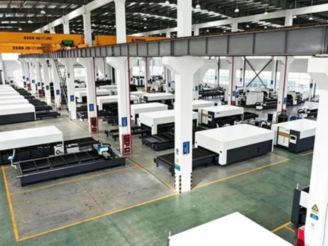
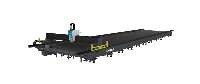
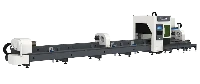
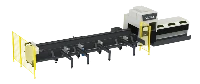
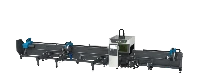
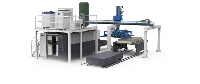
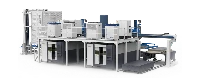
Investing in ultra-high-power technology requires a machine framework that won't warp or lose accuracy under extreme thermal stress. QLTEK Laser specializes in large-scale industrial manufacturing, featuring advanced engineering designs like the HF Series Ultra-Large Format High-Speed Fiber Laser systems. Backed by extensive manufacturing facilities and hundreds of engineers, QLTEK builds robust sheet metal laser cutting machine setups that preserve precise mechanical accuracy over decades of multi-shift operation.
Conclusion
An ultra-high-power laser cutter is a powerful financial tool. By executing a meticulous high power fiber laser cutting ROI calculation, forward-thinking metal service centers can see that the accelerated production speeds, reduced gas costs, and minimized secondary operations deliver an incredibly rapid payback period, positioning your business at the top of the supply chain.