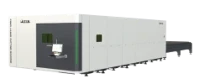
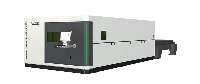
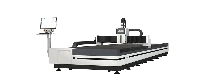
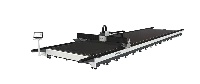
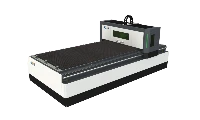
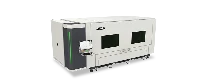
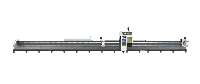
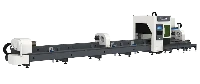
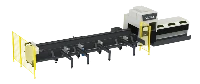
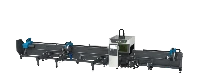
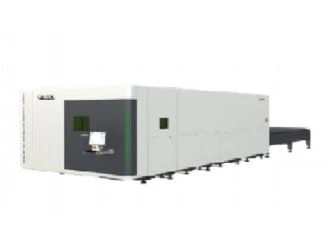
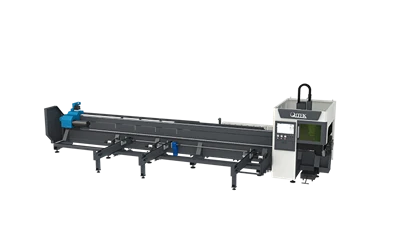
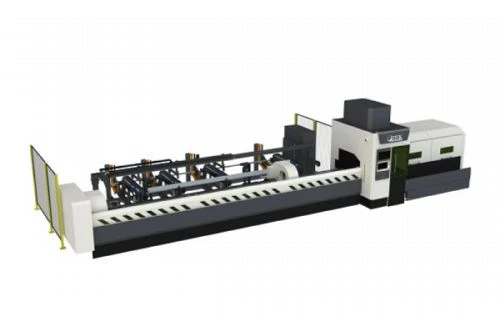
In large-scale structural steel fabrication, traditional methods like mechanical sawing, drilling, and manual plasma cutting often create severe production bottlenecks. As modern architectural and industrial designs become more complex, relying on manual labor to handle oversized, heavy-wall pipes is no longer cost-effective. Implementing heavy duty tube laser cutting automation is the most definitive way to streamline workflows, eliminate human error, and scale your structural steel fabrication output.
For decades, structural steel shops have accepted a multi-step workflow as the industry standard. A single heavy pipe often travels through several workstations: first to a band saw for cutting, then to a milling machine or drilling rig for holes, and finally to a manual grinding station to clean up rough edges.
Material Handling Risks: Moving massive, multi-ton tubes between specialized machines takes excessive time and exposes operators to workplace safety hazards.
Cumulative Tolerances: When a piece of metal is unclamped, repositioned, and reclamped across three different machines, geometric errors compound, resulting in poor fit-up during final welding.
Labor Dependency: Skilled layout layout technicians and plasma torch operators are increasingly scarce and expensive, making it hard to forecast production timelines accurately.
How Heavy-Duty Automation Rewrites the Rules
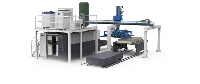
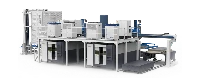
Modern high-capacity intelligent systems tackle these inefficiencies by combining all processing steps into a single, seamless cycle. An industrial-grade high power automated pipe laser cutter replaces sawing, drilling, slotting, and beveling with one software-driven setup.
1. Zero-Labor Loading and Unloading
Heavy-duty automation integrates hydraulic bundle loaders and intelligent chain-driven feeding mechanisms. Raw structural tubes-whether heavy rectangular hollow sections (RHS) or thick-walled round pipes-are measured, aligned, and fed into the chucks automatically, without requiring overhead cranes or manual rigging for every single piece.
2. Perfect Beveling for Weld Preparation
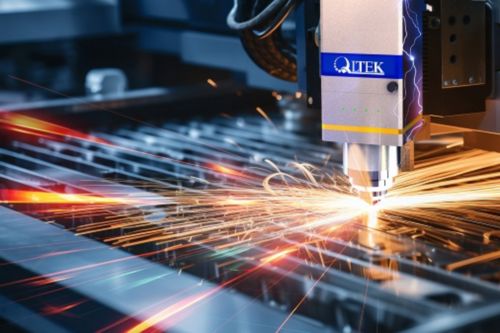
For heavy structural components, parts must be prepped with a precise V, X, or Y bevel to allow for deep weld penetration. Advanced 5-axis 3D laser heads tilt effortlessly up to 45 degrees, cutting precise weld preps directly into the tube ends while cutting the part to length. This eliminates the need for secondary manual grinding entirely.
3. Continuous Uninterrupted Workflows
By utilizing automated unloading conveyor systems, finished long parts are sorted and evacuated from the cutting zone safely while the machine immediately processes the next tube. This creates an uninterrupted production loop that operates efficiently even with a lean technical team.
Maximizing ROI with QLTEK Laser Systems
Transitioning to automated heavy-duty manufacturing requires an experienced machinery partner. As a prominent manufacturer of laser intelligent equipment since 2009, QLTEK Laser provides high-capacity tube metal laser cutting machine setups engineered precisely for rugged industrial environments. With massive production bases, QLTEK builds heavy-duty equipment capable of handling large-scale payloads with scalability up to 20kW, delivering structural components that slide together flawlessly on the assembly site.
Conclusion
Eliminating the inefficiencies in your workshop is no longer about hiring more hands; it is about deploying smarter machinery. Embracing heavy duty tube laser cutting automation allows structural steel fabricators to slash lead times, drop scrap rates to near zero, and bid on high-margin projects that were previously impossible to handle.